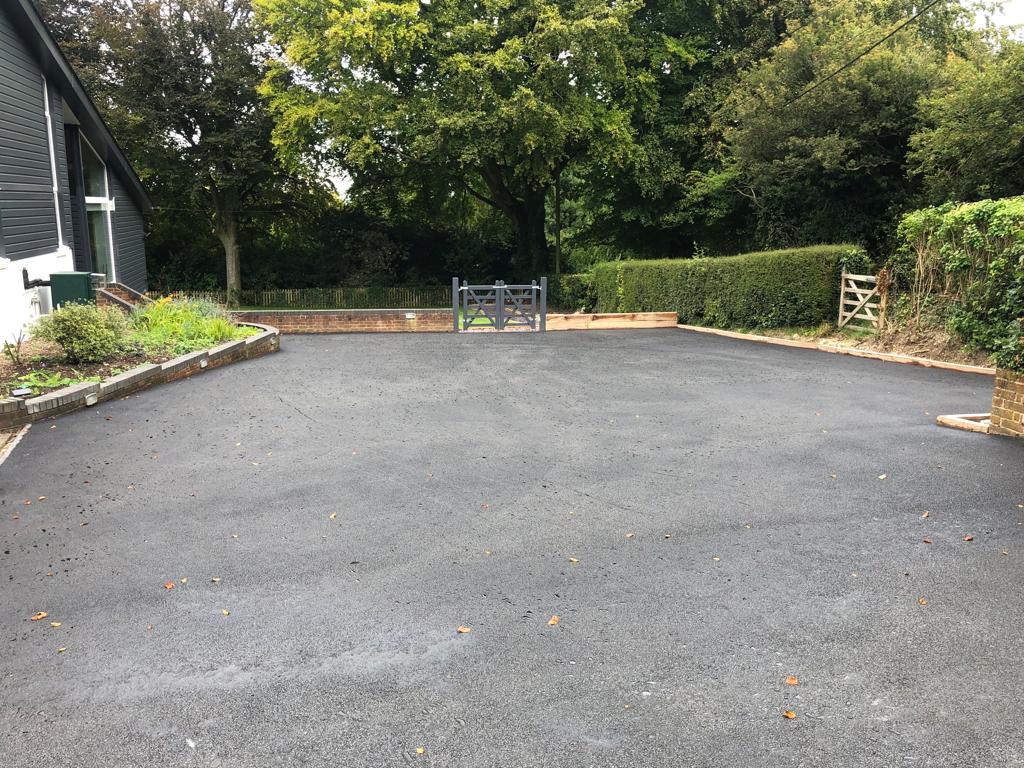
A driveway may look like a simple surface, but it is actually a pavement system designed to transfer vehicle loads through the asphalt and into the supporting layers beneath. When one section begins sinking, particularly where vehicles regularly park, it can be a sign that those layers are no longer providing consistent support.
For property owners in Sunshine, VIC, a sunken parking area should not simply be viewed as an appearance issue. Depressions can affect drainage, make vehicle access less comfortable and eventually contribute to cracking and potholes. Understanding why the pavement is sinking is the first step towards choosing an appropriate repair.
Why Do Parked Vehicles Affect Asphalt Differently?
A moving vehicle applies a load to different sections of the driveway for relatively short periods. A parked vehicle places its weight over the same area for much longer.
When vehicles repeatedly stop in exactly the same position, the pavement underneath experiences concentrated loading around the tyre contact points. A properly constructed driveway should be designed to accommodate normal residential vehicle use, but weaknesses within the base or underlying ground can become increasingly noticeable under repeated loading.
The result may be shallow depressions, wheel marks or more substantial sinking.
Weak Foundations Are a Common Cause
Asphalt relies heavily on the stability of the pavement beneath it. If the base was inadequately prepared, inconsistently compacted or constructed over unstable ground, sections may gradually settle.
This can explain why only part of a driveway sinks while the surrounding asphalt remains relatively level.
The asphalt itself may initially remain intact, but as the foundation moves, the surface follows it. Eventually, the resulting stresses can cause cracking and further deterioration.
Why Base Preparation Matters
Before asphalt is installed, the underlying pavement needs to be prepared and compacted appropriately.
Good preparation creates consistent support and helps distribute vehicle loads through the pavement. If one section contains softer or less compacted material, that area can compress more than the surrounding driveway.
This is why professional asphalt installation focuses just as heavily on groundwork as it does on the finished surface.
Water Can Weaken the Pavement Below
Water is another major factor behind sinking asphalt.
Cracks, damaged edges or poor drainage can allow moisture to enter the pavement. Once water reaches the supporting layers, some materials may soften or lose stability.
Repeated vehicle loading over this weakened area can then accelerate settlement.
A depression can make the situation worse because it may begin holding rainwater. This creates a cycle in which sinking encourages water accumulation, and moisture contributes to further pavement deterioration.
Poor Drainage Can Create Localised Low Areas
If your driveway consistently develops puddles where vehicles park, the problem deserves attention.
Standing water can indicate that the original pavement levels have changed or that drainage was not working effectively in the first place. Water may then remain against cracks and other vulnerable areas for longer periods.
Professional assessment should therefore consider more than the depression itself. The direction of surface water, surrounding levels and condition of the driveway edges can provide useful information about why the area is deteriorating.
Is the Asphalt Rutting Rather Than Sinking?
Not every depression is caused by the entire pavement settling.
Rutting occurs when repeated vehicle loads create permanent depressions along wheel paths. Depending on the cause, deformation may occur within the asphalt, the supporting pavement layers or both.
You may notice:
- Depressions corresponding with tyre positions
- Raised or displaced material beside wheel paths
- Water collecting in the affected areas
- Gradually worsening unevenness
- Cracking around the edges of the depression
Determining where the movement is occurring is important because simply adding material to the top may not address the underlying weakness.
Heavier Vehicles Can Expose Existing Weaknesses
Changes in how a driveway is used can also contribute to deterioration.
A pavement originally supporting relatively light residential vehicles may begin experiencing greater stress if heavier vehicles are regularly parked on it. Frequent deliveries or changes in household vehicle types can alter the loads placed on particular sections.
This does not necessarily mean vehicle weight is the sole cause. Rather, increased loading can reveal weaknesses in a pavement that was already inadequately supported.
Why Cracks Often Appear Around Sunken Areas
As one section of asphalt moves downward while the surrounding pavement remains stable, the surface is subjected to additional stress.
Cracks can develop around the boundary between the stable and sunken sections. Once these openings form, water has another route into the pavement.
Over time, loose material may begin appearing around the cracks and the affected area can become increasingly uneven.
This is why a small depression is worth monitoring before it develops into a combination of sinking, cracking and surface breakup.
Can a Sunken Driveway Lead to Potholes?
It can, particularly when water and pavement movement are involved.
If cracking around a depression allows moisture into the supporting layers, vehicle loads can continue breaking down the weakened pavement. Asphalt may eventually loosen and pieces of the surface can become displaced.
What began as a shallow depression can then progress into more substantial pavement failure or pothole formation.
Early assessment can help identify the cause while deterioration remains more localised.
Why Simply Filling the Depression May Not Work
It can be tempting to treat a sunken section purely as a surface-level problem. However, adding asphalt over an unstable area does not necessarily restore the support underneath.
If the base continues settling, the repaired surface may eventually sink or crack again.
A more durable approach involves determining why the pavement moved in the first place. Depending on its condition, this may require removing failed material, correcting the underlying base, restoring appropriate compaction and then reinstating the asphalt surface.
The repair should address the cause wherever practical, not simply disguise the visible depression.
When Is Resurfacing Appropriate?
Not every sinking driveway requires complete reconstruction.
If deterioration is relatively limited and the majority of the pavement remains structurally sound, localised repairs may be sufficient. Where the existing foundation remains suitable but the wider wearing surface has aged or deteriorated, resurfacing may also be considered after failed sections have been corrected.
More extensive work may be necessary when there is widespread settlement, recurring deformation or significant instability underneath the asphalt.
A professional inspection helps determine how much of the existing driveway can reasonably be retained.
Signs Your Driveway Should Be Assessed
Consider having the pavement professionally inspected if you notice:
- Parking areas becoming progressively lower
- Water regularly collecting in tyre depressions
- Cracks developing around sunken sections
- Repaired areas repeatedly sinking
- Noticeable wheel-path rutting
- Loose asphalt developing around depressions
- Several parts of the driveway settling
- Potholes forming within or beside the affected area
The pattern of deterioration can provide important clues about what is happening underneath.
The Value of Professional Asphalt Repairs
Effective driveway repairs begin with understanding the pavement rather than assuming every depression has the same cause.
An experienced asphalt contractor can assess surface deformation, drainage, cracking and signs of base movement before recommending appropriate work. This helps distinguish between isolated surface deterioration and problems requiring attention below the asphalt.
For properties in Sunshine, professional preparation is particularly important when repairing sunken sections because the restored surface needs stable support if it is to perform reliably under continued vehicle use.
Preventing Similar Problems in a New or Repaired Surface
A durable driveway depends on several elements working together. Suitable ground preparation, adequate base construction, proper compaction, effective drainage and correctly installed asphalt all contribute to pavement stability.
After installation, property owners should also monitor cracks and drainage changes rather than waiting for obvious sinking or potholes to develop.
Early maintenance can help keep water out of the pavement and identify localised problems before they affect a larger section.
Conclusion
If your asphalt driveway is sinking where vehicles regularly park, repeated loading may be exposing a weakness within the pavement. Poor base support, inadequate compaction, water infiltration, drainage problems and changes in vehicle loading can all contribute to localised settlement or rutting.
The important point is to identify what is happening underneath the asphalt before deciding how the area should be repaired. Simply covering a depression may provide limited benefit if the supporting pavement remains unstable.
For property owners in Sunshine, VIC, Sunshine Road Tech can assess sunken, cracked or deteriorating asphalt and determine an appropriate repair or resurfacing approach. If your driveway is developing depressions where vehicles regularly park, contact our team to have the surface professionally assessed and discuss a practical solution for restoring reliable vehicle access.
Call us on: 03 4159 2883
Click here to find out more about Sunshine Road Tech
Click here to complete our contact form and see how we can help with your driveway needs.